
Without proper insulation, underfloor heating can feel slow to warm up or expensive to run. Insulation boards decide whether heat moves into your room or disappears into the subfloor.
This guide explains laying insulation for underfloor heating in a clear, practical way. It covers what insulation boards are, where they should be fitted, and how to install them on both concrete and timber floors. This guide is written from hands-on experience, for people who want reliable results, quicker warm-up times, and better control over running costs.
Key takeaways:
- Insulation boards sit directly beneath underfloor heating systems
- Correctly installed insulation board reduces heat-up times
- Boards can be fitted to concrete, timber floors, and even walls
- Preparation matters more than speed during installation
- Choosing the right thickness affects performance and floor height
How to Install Insulation Boards for Underfloor Heating
When fitting underfloor heating, insulation should always be installed between the subfloor and the heating system. This ensures heat travels upward into the room rather than being absorbed by concrete, timber, or screed below.
The basic process stays the same across projects:
- Plan your board layout
- Cut insulation boards to size
- Prepare the subfloor
- Fix boards using adhesive or mechanical fixings
- Seal joints where required
Planning Your Insulation Board Layout
Before any cutting or fixing starts, plan how the insulation boards will be laid. This avoids waste, uneven joints, and unnecessary gaps.
Good layout planning includes:
- Measuring the full room footprint
- Dry-laying boards to visualise positioning
- Avoiding narrow slivers at edges where possible
- Staggering joints in a brick pattern for strength
Starting from a straight wall helps keep rows aligned. Doorways, pipes, and floor penetrations should be marked early so boards can be cut accurately.
Cutting Insulation Boards to Size
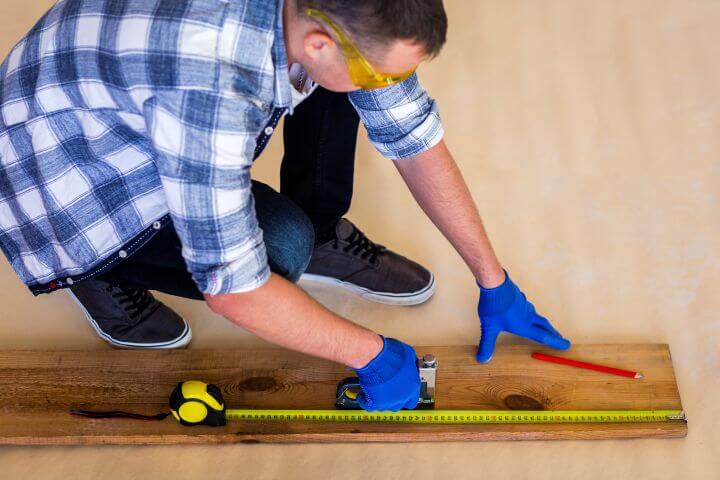
Most underfloor insulation boards can be cut using a Stanley knife or a retractable blade.
How to cut cleanly:
- Measure twice and mark clearly
- Score through the cement coating
- Snap the board along the cut line
- Trim edges if required for a tight fit
Clean cuts help boards sit together securely, reducing movement and limiting heat loss through gaps.
What Are Underfloor Heating Insulation Boards?
Underfloor heating insulation boards sit below the heating system and above the subfloor. Their role is to reduce downward heat loss and shorten warm-up times.
Their surface allows tile adhesive, levelling compound, or plaster to bond directly without priming.
Boards are available in various thicknesses, making them suitable for renovations, new builds, and low-profile installations. For low-profile installations, use thin floor insulation to ensure your underfloor heating is properly insulated with minimal build-up.
Why Insulation Boards Improve Underfloor Heating Performance
Without insulation, heat from an underfloor heating system is absorbed by the subfloor. Concrete bases are particularly slow to warm and act as heat sinks.
Using insulation boards:
- Speeds up floor warm-up times
- Reduces energy used during heat-up
- Helps rooms reach temperature sooner
- Keeps the heat closer to the floor surface
On concrete floors, insulated systems can warm within 30–60 minutes. Without insulation, this can stretch to several hours.
Insulation Board Installation on Concrete Floors

Concrete subfloors are common in ground floors, extensions, and new builds. Preparation is the most important step here.
Preparing the Concrete Subfloor
Before fixing boards:
- Remove dust, paint, adhesives, or contaminants
- Allow the new concrete to fully cure
- Check the surface is flat and dry
- Apply a suitable primer if required
Skipping preparation often leads to loose boards or uneven floors later.
Fixing Boards to Concrete
Boards should be bonded using flexible floor adhesive for tiles applied with a notched trowel.
Installation steps:
- Spread adhesive evenly
- Lay boards into the adhesive bed
- Press firmly to remove air pockets
- Stagger joints in a brick pattern
- Tape joints using glass fibre tape
For waterproof areas, seal joints with a silicone sealant as advised by the manufacturer.
Installation Onto Timber Floors
Timber subfloors behave differently from concrete, so mechanical fixing is normally used.
Preparing Timber Floors
Before installation:
- Check that floorboards are secure
- Replace damaged or loose boards
- Smooth uneven areas with a levelling compound if needed
Movement in the subfloor can transfer through to the tiles if ignored.
Fixing Boards to Timber
Boards are secured using screws and washers.
Best practice:
- Use 12 fixings per board (3 rows of 4)
- Tighten washers flush with the surface
- Avoid crushing the board
- Stagger joints across rows
- Tape joints with glass fibre tape
In wet areas, seal joints and screw holes with a suitable sealant.
Can Insulation Boards Be Installed on Walls?
Insulation boards are widely used on walls in bathrooms and wet rooms due to their water resistance, including:
- Tile backing boards
- Bathroom insulation
- Supporting electric heating systems in shower areas
Once joints are sealed, tiles can be fixed directly to the boards or over compatible heating systems, allowing heat to spread evenly across wall surfaces.
How Thick Should Insulation Be for Underfloor Heating?
The thickness of insulation depends on floor construction, available floor height and the type of heating system.
Typical guidance:
- 6–10mm: Renovations with limited height
- 10–20mm: Timber floors and upstairs rooms
- 20–50mm: Concrete slabs and ground floors
Choosing the thickest board your build allows, usually results in faster heat-up and lower energy use.
Tools and Materials You’ll Need
Before starting insulation board installation, gather:
- Insulation boards (correct thickness)
- Flexible tile adhesive or fixings
- Measuring tape and pencil
- Stanley knife or saw
- Notched trowel
- Screws and washers (for timber floors)
- Spirit level
Having everything ready prevents rushed decisions mid-install.
Installing Underfloor Heating Over Insulation Boards
Once boards are installed:
- Lay heating mats or cables directly on top
- Follow manufacturer spacing guidance
- Avoid overlapping heating elements
- Test the system before covering
After testing, the floor can be tiled, levelled, or finished as required. Before switching on the system, follow the guidance on turning on underfloor heating for the first time to avoid damage.
Common Mistakes to Avoid
Mistakes seen most often include:
- Installing boards on damp floors
- Leaving gaps between boards
- Using rigid adhesive instead of flexible
- Skipping joint taping
- Not staggering joints
Each of these can affect how heat spreads through the floor.
Choosing the Right Insulation Boards
Not all boards perform the same. Look for:
- Low thermal conductivity
- Cement-coated surfaces
- Water resistance
- Compatibility with your heating system
For most projects, purpose-made underfloor insulation boards provide consistent results across floor types.
Conclusion
Laying insulation for underfloor heating is one of the most effective ways to improve a system’s performance. When insulation boards are fitted correctly, heat stays closer to the surface, rooms warm faster, and running costs stay under control.
Whether you’re working with concrete or timber floors, careful preparation and the right fixing method make a clear difference. Take the time to install insulation properly and the heating system above it will work as intended for years, whether it’s an underfloor heating water system or an electric underfloor heating system.
Underfloor Heating Trade Supplies insulation options are selected to work with modern heating systems, helping reduce warm-up times and improve system control. With clear product guidance and UK-based support, UFHTS makes it easier to choose the right board thickness and fixing method for each project, whether you’re renovating a single room or fitting heating throughout a property.
FAQs
How to install insulation for underfloor heating?
To install insulation for underfloor heating, install the insulation boards directly onto the subfloor using adhesive on concrete or screws and washers on timber. Boards should be staggered, tightly fitted, and taped at the joints.
How thick should insulation be for underfloor heating?
The thickness of insulation for underfloor heating depends on floor height and build type. Concrete floors often suit thicker boards, while renovations may need slimmer options.
Do you need to insulate under underfloor heating?
Yes, you need to insulate underneath underfloor heating as without insulation, heat is lost downward, increasing warm-up times and running costs.
