
Thinking about pairing your underfloor heating combi boiler setup, but not sure how it all fits together? Most homeowners want warm floors without replacing the boiler they already rely on.
A properly set up combi boiler works brilliantly with a water-based underfloor heating system. In this guide, I’ll walk you through how a combi boiler for underfloor heating works, how to run radiators and UFH together, installation steps, costs, common mistakes, and the pros and cons to weigh up before starting your project. By the end, you will know what to expect from underfloor heating with a combi boiler. You will also learn how to make your system run smoothly.
Key Points:
- A combi boiler can run both radiators and underfloor heating when designed with the right flow temperatures and zoning.
- UFH needs lower temperatures, so a mixing valve and manifold are essential.
- Installation is easier in new builds, pricier during renovations.
- A hybrid setup (radiators upstairs, UFH downstairs) keeps costs down.
- Avoid common issues like poor zoning, incorrect flow settings, and missing bypass circuits.
Can You Use a Combi Boiler with Underfloor Heating and Radiators?
A combi boiler can be used with underfloor heating and radiators; it’s one of the most common setups in modern UK homes. The boiler heats water on demand and supplies it to both the radiator and underfloor heating circuits, but each must be controlled separately.
A combi boiler produces water at a temperature ideal for radiators (typically 60 to 70°C). Underfloor heating, on the other hand, runs far better at lower temperatures, usually between 35 to 45°C. Because of this, the system needs a way to drop the temperature before sending water through the UFH loops.
That’s where a manifold with a blending valve and dedicated pump come in. When the design is done properly, a combi boiler underfloor heating system works like this:
- The boiler heats the water as normal.
- Motorised valves split the flow between radiators and the underfloor heating manifold.
- Thermostats control each zone independently.
- The blending valve reduces the UFH temperature to a safe and efficient level.
This zoning is key. It allows the boiler to meet the higher temperature demands of the radiators without allowing that hotter water to enter the underfloor heating loops. Leaving a balanced, flexible, and efficient system that keeps your floors warm while your radiators continue to work exactly as expected.
If you want to explore system types before choosing, look through our full range of water underfloor heating kits.
Pros and Cons of Underfloor Heating with a Combi Boiler

Pairing underfloor heating with combi boiler systems has clear benefits, but there are a few drawbacks worth knowing before you install.
Pros:
- Lower upfront cost than heat pumps or full system upgrades.
- Less disruption, especially when keeping radiators upstairs.
- Works well in extensions, renovations, and ground floors.
- Space-saving – no need for a hot water cylinder.
- Easy zoning for improved comfort and better temperature control.
Cons:
- Higher running costs compared to heat pumps, as gas boilers run hotter and won’t match the long-term efficiency of low-temperature systems.
- Requires extra components like blending valves, thermostats, manifold pumps, and motorised valves.
- You may need larger radiators if running lower boiler temperatures throughout the home.
- Heat pumps are still more efficient overall, especially when paired with UFH.
If you’re unsure whether your boiler type is the right choice, read our detailed guide on the best boiler for underfloor heating.
Cost of Underfloor Heating with a Combi Boiler
The cost of installing a combi boiler for underfloor heating varies widely depending on whether you’re renovating or installing in a new build, the size of the heated floor area, whether you’re adding radiators as well, whether the combi boiler needs replacing, and the floor construction.
Average Costs for UFH + Combi Boiler Systems
| Setup Type | Typical Cost Range |
| Dry UFH + house renovation + new combi boiler | £3,800-£8,800 |
| Wet UFH + house renovation + new combi boiler | £7,800-£17,300 |
| Dry UFH in new build + new combi boiler | £2,500-£5,300 |
| Wet UFH in new build + new combi boiler | £4,800-£10,800 |
If you keep your existing boiler, you’ll usually save £800 to £2,800. A hybrid setup, radiators upstairs, underfloor heating downstairs, also helps keep the project more affordable.
A well-maintained combi boiler paired with correctly installed underfloor heating can reduce running waste and keep temperatures more consistent than radiators alone.
Browse our under carpet heating products to have your desired heating solution in your home.
Common Mistakes to Avoid with Combi Boiler and Underfloor Heating Systems
Even with a reliable boiler, design mistakes can stop a system from performing properly. These are the issues installers see most often:
1. No blending valve for UFH
Radiator water is far too hot for underfloor loops. Without a blending valve to bring the temperature down, you risk damage, discomfort, and poor efficiency.
2. Wrong flow temperature
Underfloor heating runs consistently and slowly. If flow temperatures are too high, you’ll burn energy and reduce comfort. If they’re too low, the system may feel sluggish.
3. Using a single thermostat for both zones
UFH warms differently to radiators. Each needs its own thermostat to keep the system balanced.
4. Lack of a bypass circuit
If both heating zones shut off, the boiler still needs a safety route for excess heat. Without a bypass, boiler lockout issues are likely. Avoiding these errors helps your underfloor heating combi boiler system last longer and work more predictably throughout the home.
How to Install a Combi Boiler for Underfloor Heating
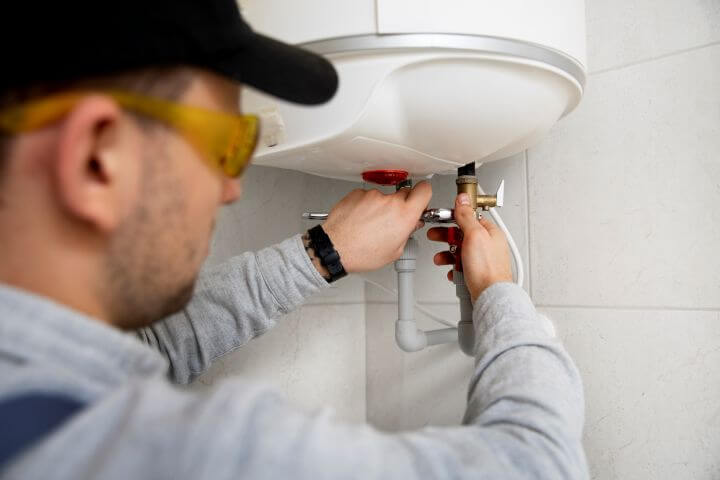
Below is a step-by-step outline of how installers typically set up a combi boiler underfloor heating system.
Step 1: Assess Boiler Capacity
Your combi boiler must be powerful enough to supply hot water and heating at the same time. Engineers will look for:
- Suitable kW output
- Good flow rate
- Compatibility with a manifold system
Most modern combi boilers can support underfloor heating, but older units may struggle with simultaneous demand.
Step 2: Install the Underfloor Heating Pipework
Underfloor heating pipework is clipped, stapled, or set into boards or screed depending on the floor type. Wet UFH systems are laid in loops, connected back to a central manifold.
What this stage involves:
- Installing insulation
- Laying the pipe loops to the design plan
- Pressure testing the system
- Connecting to the manifold ports
Step 3: Fit the Manifold and Controls
The manifold is the heart of the system:
- Splits the water supply between each UFH zone
- Uses a pump to circulate water
- Houses the mixing valve that reduces boiler output temperature
- Connects to thermostats for each room
The manifold ensures a consistent heat distribution and prevents the boiler’s high-temperature flow from entering the UFH pipes directly.
Step 4: Add Zoning and Motorised Valves
Your home will likely have at least two zones, one for radiators and one for UFH.
Motorised valves allow the boiler to feed either circuit independently. When a thermostat calls for heat, the relevant valve opens, and the boiler fires accordingly. This is how the system ensures your radiators can run warm while your floors run cooler.
Step 5: Set Flow Temperatures
The engineer configures:
- Boiler flow temperature (usually higher for radiators)
- UFH mixing valve temperature (around 35–45°C)
- Pump speed
- Pressure levels
Correct temperature settings are key for performance and comfort.
Step 6: Commission the System
Final checks include:
- Running every zone
- Verifying that thermostats respond properly
- Ensuring the boiler modulates without short cycling
- Checking pressure drops and flow rates
- Balancing the system for even heat
Once complete, your underfloor heating with combi boiler system is ready to run efficiently and independently across all zones.
Conclusion
A well-designed underfloor heating combi boiler system offers steady comfort, flexible zoning, and a practical way to upgrade your home without replacing your existing boiler. With the right manifold, flow temperatures, and controls in place, UFH can work alongside radiators without compromise.
At Underfloor Heating Trade Supplies, we work with homeowners every day who are upgrading their heating system while keeping their existing combi boiler. Our full range of water underfloor heating is designed to integrate smoothly with modern combi boilers, with reliable manifolds, MLCP pipe, thermostats, and installation accessories that make zoning straightforward. Whether you’re fitting UFH in a single room or designing a whole-house hybrid system, our team is here to help you choose the right components, avoid common mistakes, and build a setup that runs smoothly from day one.
Installing your underfloor heating in a bathroom? Browse our suitable bathroom underfloor heating kits.
FAQs
What type of boiler is best for underfloor heating?
The best boiler for underfloor heating is a modern gas boiler that works well with it, provided it can handle the required flow rates and zoning. Some homeowners prefer system boilers for larger properties, but combi boilers are still very common in UFH installations.
Do I need to upgrade my boiler for underfloor heating?
You do not always need to upgrade your boiler for underfloor heating. Many combi boilers already on the wall can support UFH as long as they’re in good condition and have the right output. An installer can confirm whether your boiler is suitable.
Can a combi boiler run underfloor heating?
Yes, a combi boiler can run underfloor heating when paired with a mixing valve, manifold, and separate thermostat controls. This ensures the lower temperatures needed for UFH are delivered safely and efficiently.
Source
Building Regs Drawings (2025) Building Regulations for Underfloor Heating Installations: Essential Compliance Guide for UK Properties. Available at: https://www.buildingregsdrawings.co.uk/2025/03/22/building-regulations-for-underfloor-heating-installations/ [Accessed 18 Nov. 2025]
